
Local podcasts grow with geo-targeted audio ads
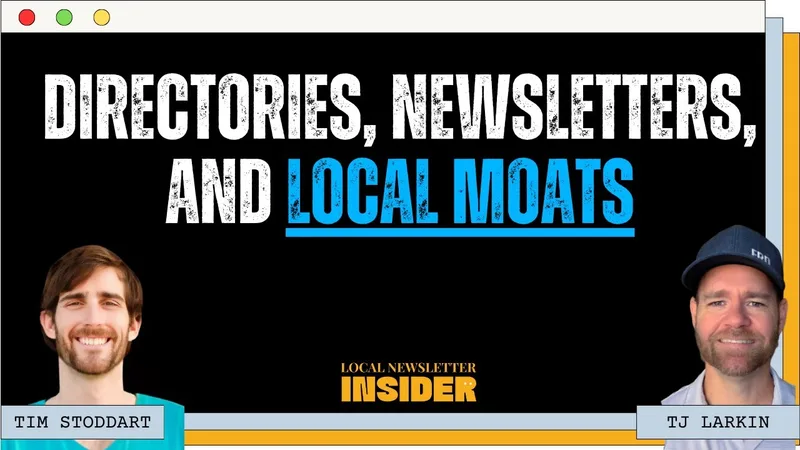
Paul Gewuerz of LocalPod on 8 to 10 minute news podcasts built from a publisher's own stories, and the geo-targeted audio ads he uses to find listeners.
 TJ LarkinHost, Local Media HQ PodcastSeptember 5, 2025 · 9 min read
- Turn the stories you already write into audio. Paul's team converts a publisher's written stories into podcast episodes with AI text-to-speech, checks the quality, and pushes them out to the podcast apps.
- Keep the show short and regular. The core product is a "news blast" of about three stories with ad breaks and local events. Paul says 8 to 10 minutes is the sweet spot.
- Grow it with geo-targeted audio ads. Paul runs 30-second ads through AudioGo into big podcasts and Pandora, aimed at specific ZIP codes. He calls it the secret sauce for local audio.
- Legacy papers have the journalism and a gap to close. Their reporting is strong, but many are slow on newsletters, podcasts and AI, and that gap is where Paul sees the opportunity.
Paul Gewuerz runs LocalPod, a company that helps local newsrooms put out podcasts. He didn't start in media. He came to it through audiobooks, and he now works with both old newspapers and newsletter-first startups. In this conversation he explains what a local news podcast actually sounds like, why geo-targeted audio ads are the best growth tool he's found, and where he thinks legacy publishers are stuck.
From beer distributor to local audio
Paul worked for a beer distributor in Denver for a long time, handling concession venues like Red Rocks Amphitheatre. He didn't like corporate life and went looking for freelance work. He heard someone talk about voice-over, figured people had told him he had a good voice, and decided it would be easy. He left his job and narrated about 50 audiobooks for other authors.
Freelancing was feast or famine: either nothing coming in or too much to finish. He already had an audio toolkit and loved podcasts, and podcasts were recurring work, so he started producing them for people with large audiences. That lasted a few years, but it wasn't his thing.
Then a local media company in the Seattle area reached out. They wanted a podcast, and Paul edited the audio and pushed it to the apps. He got more interested in the space and started going after local media companies on purpose.
Text-to-speech changed the job
At first Paul only edited audio. Reporters recorded their own stories, or a voice actor in his network narrated written ones. Then ChatGPT arrived and he went looking for tools. He found text-to-speech models, with ElevenLabs the best known, where you upload a script and get spoken audio back.
It isn't perfect, he says, so his team checks the quality before anything goes out. The pitch to a publisher became simple: we'll take your written content, run it through the model, check it, and put it out as a podcast. It was "kind of a hit." Paul says he now helps those publishers grow and monetize the shows too.
What a news blast sounds like
Podcasts mean different things to different people, so Paul uses a pizza comparison: wood-fired, Little Caesars and frozen French bread are all pizza. His standard local format starts with a custom intro with music explaining the show. Then comes either a script the publisher supplies or two or three of their top trending stories from the past few days, reformatted for audio.
There's an ad break after one story, another after the second, and a third section for local events and happenings. Larger publishers might publish once to three times a week, sometimes five or six. Paul says the point is habit. Once people build a "listening muscle," publishers can drop in a long investigative piece, an interview with the mayor, or branded content.
His example of branded content is the barbecue place down the street. You interview the founder and a couple of servers and tell the human story of the business. Paul says it's high value because listeners drive past the place all the time. He compares the whole thing to a local newsletter in audio form, and says it fits a commute, a workout or a dog walk.
Geo-targeted audio ads are the growth engine
TJ raised the obvious worry: how many people in one town listen to podcasts, and how do they find out yours exists? Paul says to start with what publishers already own. Put it on the website, promote it in the newsletter, and repeat it everywhere. He has no data on this, but in his experience newsletter and podcast audiences overlap heavily, and newsletter-first publishers get traction early.
The bigger lever is a platform called AudioGo, a digital ad platform just for audio. His team produces a 30-second ad with a voice actor and music, and Paul usually opens with something very local. For a show covering Colorado's Peak to Peak region, the ad starts with the region's name. AudioGo inserts the ad into the top podcast networks and Pandora, and he can limit it by ZIP code, so anyone listening to a true crime podcast or Pandora in those ZIP codes hears it. Paul sometimes zooms out to about a 50 square mile radius.
The best way to grow a podcast is through other podcasts. Any podcast. But that's kind of the secret sauce with local in particular: you can geo-target it.
TJ compared it to Meta ads for local newsletters. The difference, he said, is that an audio ad finds people who already listen to podcasts, while a Meta ad for a local podcast reaches a town where most people may not. Paul agrees, and says it far outperforms social for his niche. They've only just started it, and he's now building it into his packages up front because it's working.
- 01Use what you own
Put the show on the publisher's website and promote it in the newsletter.
- 02Repeat it
Push it out on every channel, again and again.
- 03Make a local ad
A 30-second spot with a voice actor, opening with something specific to the region.
- 04Target by ZIP code
AudioGo places it in big podcasts and Pandora for listeners in those areas.
- 05Widen the radius
A hyper-local show can reach out to about 50 square miles.
What legacy publishers do well, and where they struggle
Paul works with both legacy newspapers and digital-first outlets, including members of LION Publishers, a group of 400 to 500 independent online publishers. He says the reporters and editors at legacy papers are mission-driven. Their reporting is generally at a higher level than a newcomer who just curates other papers' stories, and he thinks people overestimate how easy it is to start from scratch.
Keeping up with AI, newsletters and podcasts is "a tossup," he says. The deeper problem is the old wall between the business side and the editorial side. In this era you have to be both: understand costs and margins and still put out journalism that serves the audience.
Paul also explains how the money went. For a short window, newspapers were wildly profitable on classified ads. Then Craigslist came along and decimated that income almost overnight. He compares it to musicians in the seventies and eighties, who got rich owning distribution until Napster arrived. His point is that the models are there now, and local media needs execution.
The PDF newspaper
TJ described a problem he's seen in the markets he researches. The two biggest local competitors in a town still send a link to a "digital paper," a PDF you have to zoom into on your phone. Paul says that's a good example of what he means. His answer is to show a legacy publisher a modern, readable, mobile-friendly product and offer to upgrade theirs. He says most of the local publishers he talks to are at a scale where they could make that change, and aren't giant corporations that are hard to move. TJ put it at 50 to 100 people tops.
TapInto and a cafe in Marfa
Paul first planned to launch local podcasts in 50, 100 or 200 cities himself. He dropped it: he couldn't make a quality product without knowing what's going on in each town. He thinks it's always better to have someone on the ground.
He points to his friend Michael Shapiro, who founded TapInto on the East Coast. Shapiro started a local website and newsletter about 20 years ago, and when the next town asked for one, he built a franchise model. He sells the model and the backend to people in their hometowns. Paul says there are about 95 franchises, mostly in New Jersey and Florida, and that Shapiro says they're usually profitable within six to eight months. Operators hire writers and sell the ads, while Shapiro supplies the systems and formatting.
Paul's other example is a couple in Marfa, Texas, who bought the local newspaper's print shop and turned it into a cafe and event space. The business is profitable and helps fund the journalism, and Paul says it added 10 or 11 jobs in a tiny town.
Selling ads in a new local media company
Paul's advice on sales is plain: network, and make a compelling case to local businesses. He tells the story of a friend in Red Bank, New Jersey, who runs an agency and publishes a local site. His first big win was a banner on his site that flopped open to shout out a local butcher's daily lunch special. The butcher became a customer for about 10 years and paid in cash.
Paul's podcast tip is that your newsletter space is a selling point from day one, because you can sell a "brought to you by" banner for the podcast. Beyond that, go knock on doors. If you can bring business into a shop, he says, it's worth their money.
Questions people ask
What is LocalPod?
What is a news blast?
How does geo-targeted audio advertising work?
Why does Paul say audio ads beat social for local podcasts?
TJ is the founder of Local Media HQ. Every week he talks with local media operators about what is actually working in their towns.