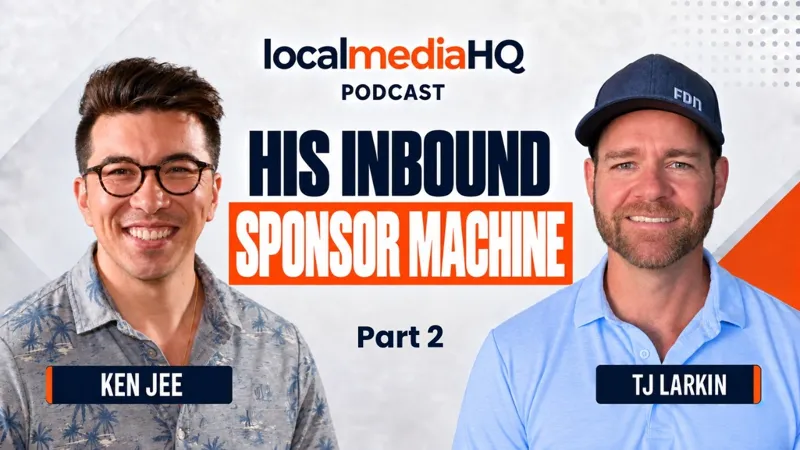

A Weekly Local Podcast That Made Six Figures
Troy Farkas left ESPN and Spotify, started Seacoast Stories in Portsmouth, New Hampshire, and now makes six figures from a weekly audio-only podcast, live shows, dinner clubs and sponsors.
 TJ LarkinHost, Local Media HQ PodcastNovember 12, 2026 · 8 min read

- A side project turned into a living. Troy started Seacoast Stories in summer 2024 as a creative outlet. After Spotify laid him off in June 2025, it became the business.
- Followers do not predict turnout. His first dinner club had 4,500 Instagram followers, no newsletter, and about 40 people. A Nashville account with 500,000 followers sold 11 seats.
- Sponsors buy a campaign, not a banner. One dinner club can carry a sponsor's name on the podcast, Instagram stories, the website and the recap post.
- Consistency is the whole game. A new episode every Monday at 5 AM Eastern, since the first one.
Troy Farkas makes six figures from a local podcast that is still audio only. He says he planned to scratch his way to about $75,000 this year, which is what he figured it costs to live in Portsmouth, and that he will end up at roughly double. Rae Lambert, the founder of the dinner club platform DNNR, joined us because Troy was her first customer, and the two of them tell the story from both sides.
If you want more from Rae, her earlier conversations are A Dinner Club Your Audience Fills for You and her update on in-person dining events.
A producer who did not plan to start a business
Troy grew up around newspapers. His parents were writers and editors, and his dad was a sports editor at the Seattle Times. He told himself he would stay out of the family business, then took a job at ESPN in Bristol, Connecticut in 2017, first in radio and then in podcasting. He later moved to Spotify to work on UFC and WWE shows.
He moved to Portsmouth in 2023 and noticed how much people in the Seacoast region wanted to help each other. He went looking for local shows and papers that told those stories and found options, but nothing that impressed him. So he started one himself, a weekly podcast, in the summer of 2024. He had zero intention of making money from it. It was the side creative project he always keeps going.
The first live show proved it was real
His first live podcast was in January 2025, and about 100 people showed up. It sold out, and it had sponsors. That was when he thought there might be something here. Even then, he says the plan was a modest one, around $20,000 of extra income for the year from live shows and sponsorships.
Then Spotify laid him off in June 2025. Two weeks later, Rae and her husband Ryan came to him with an idea for a dinner club. Their earlier app, a meetup platform that had 150,000 users, was not making money. Troy's business was not ready to carry him either. The two companies were stuck at the same moment, and they tried it together.
Followers do not predict who shows up
This is the part Rae wanted the audience to hear. People ask her how many followers they need to run a dinner club, and her honest answer is that she has no idea. When Troy launched, he had 4,500 Instagram followers and no email newsletter and still sent about 40 people to dinner. Her second customer, a Nashville account with 500,000 followers, sold 11 seats.
Today Troy has about 16,000 Instagram followers, and Rae says he sends more than 100 people out to dinner twice a month. She says he has made more than $30,000 through DNNR directly, separate from his sponsorship income. Her view is that a small, engaged local audience is worth more than a huge one that has no reason to leave the house.
He also takes the dinner club to different towns around the Seacoast instead of staying in Portsmouth. He asks each town's chamber of commerce and business groups to help spread the word. Rae says that in Newmarket, a small town nearby, there were no seats left in town. They also run a lot of events midweek, because that is when restaurants need the revenue.
Consistency is the number one most important thing when you're trying to grow a brand.
More than dinner: singles nights and pub crawls
Troy did not plan on dinner clubs, singles nights or pub crawls. He listened to the audience and kept adding things. One of his singles nights has people go on stage and pitch a single friend to the room with a PowerPoint. A pub crawl drew about 50 people in pouring rain.
He is still working out how to get more men to come. His audience is about 70 percent women, and one singles night had 85 women out of 100 sign-ups. On the dinner club questionnaire, 95 percent of people say they want friendship, not romance.
How Troy and Lucy sell sponsorships
Troy says most of his income is sponsorships, followed by events and dinner club revenue. His director of partnerships, Lucy, has more than 10 years of corporate sales experience. She handles many of the intro calls. When a deal is close, Troy joins, because brands like to meet the person who will be talking about them.
He keeps a list of about 50 ways to include a sponsor, and many of them are subtle. He prefers a package over a one-off social post.
- 01Presented by
The sponsor's name is on the dinner club in every mention
- 02On the podcast
Mentioned in the weeks leading up to the dinner club
- 03On Instagram
Named with the ticket link in stories
- 04On the website
On the ticket page and the dinner landing page
- 05During and after
Shout-outs at the event and a thank you in the recap post
Rae says this is where many creators fall short. Troy can offer a podcast read, three Instagram stories, a seat at the dinner club and a spot at the live show. Most others can only offer a standard banner at the top of a newsletter.
Ads that people stay for
Troy writes his own 45 to 60 second ad reads and delivers them in his own voice, with local references. At ESPN, he says, an ad could mean 30 percent of the audience dropped off and only 15 percent came back. On his show, he sees about a 7 percent drop-off, and listeners come right back.
He is picky about who he promotes. Host-read podcast ads are still among the most effective kinds of marketing, he says, and he cannot afford to have the audience turn on him. He also says some older business owners in his area focus on follower counts. He answers that his account has about five times the engagement of some larger local accounts.
AI behind the scenes, people up front
Troy quoted Gary V, who said the way to win in 2026 is to lean fully into AI or act like it is 1956 and go analog. Troy is choosing mostly analog. He will add AI tools to his workflow and back end slowly, and nothing public-facing.
Rae says DNNR uses a lot of AI to build the product, but she wants the dinner itself to stay human. They do not message attendees to connect them afterward, because she would rather people be brave and ask for a number. Her view is that making things smoother can cost you the human part.
What Troy wants to do next
In 2027 he plans to double down on events, including charity dinner clubs and maybe a private dinner at a nearby resort. He also wants to add articles to the website for stories that do not fit a podcast, move to full video at the start of 2027, and maybe someday do a magazine. He calls it being a full-fledged media organization.
His advice to anyone starting out is to ask whether you can be consistent before you begin. Pick a day and time and stick to it. Rae adds that you have to love it, and that you should make the content you want to make. She changed her own newsletter that way and says only three people unsubscribed.
Questions people ask
Who is Troy Farkas?
How does a weekly audio-only local podcast make six figures?
How many followers do you need to run a dinner club?
What is Troy's advice for starting a local media brand?
TJ is the founder of Local Media HQ. Every week he talks with local media operators about what is actually working in their towns.