
His best-selling sponsorship is a column written by the sponsor
Ken Jee grew Austin Founders Feed to 6,500 Austin business owners in under a year. His top sponsor slot is an expert column, and it's booked out for months.
 TJ LarkinHost, Local Media HQ PodcastSeptember 22, 2026 · 8 min read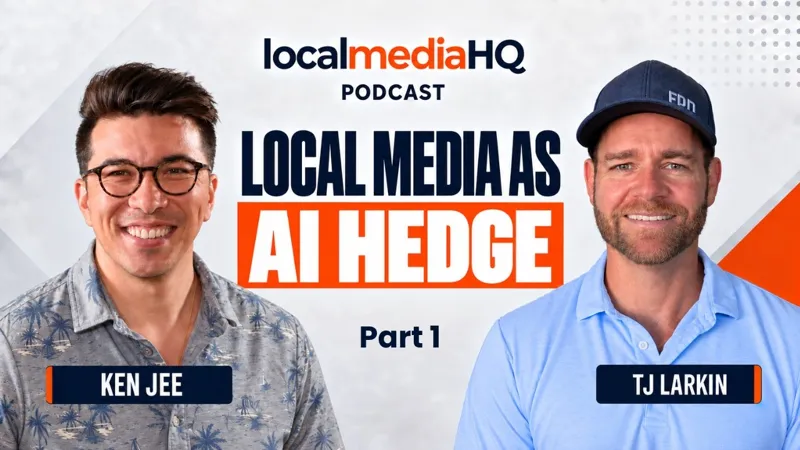
- Sell trust, not clicks. Austin Founders Feed's top sponsorship is a partnered expert column. Local experts pay to write something useful, and it's booked out at least two months.
- Go B2B and the math changes. Ken picked an audience that pays for services. 60 to 70% of revenue is sponsorships, and about 30% is SparkLoop referrals.
- Make a list people want to share. A top connectors list, with a post for each person, flipped growth from mostly paid to mostly organic.
- Keep the brand human. He pulled AI-made Meta ads even though they were cheaper, and records a real founder interview every Friday.
Ken Jee runs Austin Founders Feed with his partner Warren Wales, a local newsletter for business owners in Austin, Texas. It started in December 2025 and, by the time we recorded, was about to cross 6,500 subscribers. This is the first of two parts. Here Ken explains why he went local and B2B, why his best sponsorship is a column the sponsor writes, and how one list of Austin connectors changed where his growth comes from. In part 2, he shows how his business directory became his sponsor funnel.
Why a data science YouTuber went local
Ken built his name on YouTube, making educational data science content. Over the last few years he watched AI change that world fast. One person can now do the data science work that used to take several. Content is getting cheaper and more common, and people trust what they see online less.
So he asked himself what would hold up through all of that. The answer he kept landing on was local businesses taking part in their local community. He and Warren decided to make a newsletter for the group they already liked spending weekends with: Austin business people who are trying to move fast.
There was a business reason, too. On YouTube, most of his audience were beginners without much money, and charging them a lot felt like taking advantage. Business owners are different. Ken pays for business tools and an accountant himself, and he'd rather pay someone on a recommendation than guess. So the newsletter covers local events, local business news, founder interviews, and now expert columns.
He's honest that those aren't huge numbers. But it's eight or nine months in, and it grows every month. He and Warren guess there are 80,000 to 100,000 business owners in Austin. Reaching 10% of them in a year would be a strong signal for them and for sponsors.
The SparkLoop share is worth noticing if you run a local newsletter. Ken says his readers have high intent, and none of the national newsletters SparkLoop recommends compete with a local one. A B2B reader also tends to be the kind of person who signs up for those recommendations.
The expert column is the top sponsorship
Austin Founders Feed's best-selling sponsorship slot is a partnered expert column. A local business pays to write a column for the newsletter. A financial planner might write about taxes. An HR company might write hiring tips. Ken and Warren give real editorial feedback and won't publish something they aren't proud of. When we recorded, the slot was booked out for at least the next two months.
The amount of trust that is created through those value-oriented columns, for us we believe is just way higher than a traditional sponsorship plug.
His reasoning is about the kind of sale his sponsors make. A wealth manager wants 1% a year to manage your money for the foreseeable future. A quick click doesn't lead to that. Reading how someone thinks, month after month, might. Ken says SaaS and consumer products haven't done well with his audience, and the return won't look anything like a Meta ad. What sponsors buy is harder to measure: trust and relationships.
Sponsors also get more than the page. Ken and Warren go to a lot of events and know a lot of people, and a column partner gets access to those relationships too. They remind sponsors of that on purpose.
Staying human when AI is cheaper
Every Friday the newsletter runs a founder interview. It takes Ken about an hour and a half to record and clean up, and he sees that small extra effort as what separates Austin Founders Feed from something fully automated.
He made the same call on ads. Early Meta ads used AI and cost about 50 to 70 cents per subscriber. But maybe once a week someone commented that the ads were AI. He pulled them. Ads without AI cost around a dollar, roughly 30 cents more. He'd rather pay that than have people think his brand is AI, because that would hurt it longer term.
The connectors list that flipped growth to organic
Most subscribers came from Meta ads until about a month before we recorded. Then a single campaign flipped it to mostly organic.
- 01Start with 20
He reached out to 20 people he saw as big connectors in Austin, people with newsletters, events and audiences.
- 02Ask who else belongs
Each one recommended others, which grew the list to roughly 60 people.
- 03Get every blurb right
He contacted everyone on the list and made sure what they wrote about each person was accurate.
- 04Post one a day
They made a big deal of the list, posted it everywhere, then did a daily social post about one person.
Everyone they wrote about shared it. Ken learned the "get it right" step the hard way. As a YouTuber he showed up on plenty of top creator lists that got his picture or details wrong, and he never shared those. Because he reached out to everyone, he also has a direct relationship with each person now, which he plans to use for an event. His open rates went up during the same stretch, though he's careful to say he doesn't know exactly why.
TJ compared it to the classic "best of" contest, where winners have to share to win. Here, people share because they're being featured as people.
Why it should all be win-win
Ken comes from YouTube, where collaborating gets everyone more. He brings that to Austin. He partners with Ethan Brooks of Austin Business Review, a newsletter that competes with his, and they recommend each other's events. His math: one 2,000 person event thrown with five big community groups beats each group throwing its own 200 person event. He doesn't know exactly how giving freely will pay off, but he's "virtually certain" it will, and it already has in traffic.
Three kinds of businesses
Ken thinks about three types of businesses:
- Local community. Austin Founders Feed, plus the Austin Creator Brief, the same model for content creators in Austin. He thinks a business like Austin Founders Feed could make a couple hundred thousand a year, but he values it more for the people and chances it creates.
- Cash flow. A newsletter agency for content creators, started about two months before we recorded. It costs about $3,000, set up front. They build the signup pipeline, SparkLoop setup and welcome emails so a creator's newsletter can earn roughly 50 cents to $5 per subscriber. At about 1,000 new subscribers a month, Ken says, a client can earn it back in two to three months. They've onboarded about 12 people and sold five or six packages.
- A long shot. A bigger national newsletter, likely for his existing audience of data scientists and software engineers, maybe paid. He thinks $50,000 to $100,000 in ads plus his network could get it going.
Ken is a natural fit to sell the agency. He estimates he lost out on about $200,000 during his YouTube career by not having a newsletter and funnel. Years ago he also ran an agency that got data science creators ad deals and took them on group trips. Those relationships are why many creators will share his projects for free now.
He even tells prospects they can set it up themselves, and asks only that they use his affiliate link. Many pay anyway because they trust him.
He'd rather partner than host
Ken admits he doesn't enjoy running events. For Austin Founders Feed, they partner with other groups, help with promotion, ideas and speakers, and host a coffee event about once a quarter when Warren is in town. Austin already has at least one business event every day. Creator events are rarer, about one a week, so that's where he's willing to host more. That story continues in part 2.
Questions people ask
Who is Ken Jee?
What is a partnered expert column?
How does Austin Founders Feed make money?
How did the top connectors list help growth?
TJ is the founder of Local Media HQ. Every week he talks with local media operators about what is actually working in their towns.