
Start on Instagram and reach 41,000 Salem followers with a phone
Jacob Espinoza grew What's Happening Salem to 41,000 Instagram followers in about a year and a half. He covers the four video types that work, how he prices them, and why the window is closing.
 TJ LarkinHost, Local Media HQ PodcastJanuary 19, 2026 · 8 min read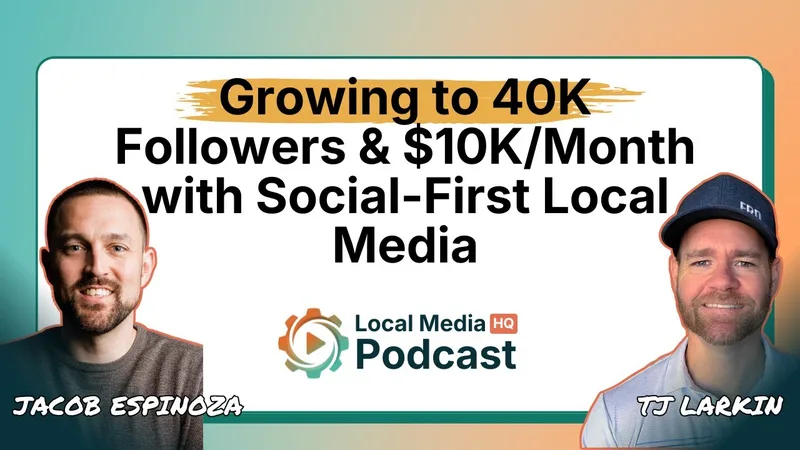
- Start on social if you have no budget. A phone and zero dollars gets you going on Instagram, while a newsletter usually means paying for ads. Use the first sponsor money to invest in the rest.
- Four video types carry the page. B-roll highlights, green screen news, clipped city council meetings and memes. Jacob says you can grow on one, but mixing them gets the most attention.
- Feature lots of businesses and the sales follow. When a business sees a competitor's post pull 20,000 views, they call him. He sells that attention at $500 to $750 a video, with a bigger package on top.
- The window is closing. More people see the opportunity every month. Pick a lane and show up now, because a year from now your town may have nine pages.
Jacob Espinoza is back for his third visit, and this time the conversation is all about social media. About a year and a half before we recorded, he started What's Happening Salem, a page on Instagram that now has 41,000 followers in a city of 180,000. We talked about the video types that work, how he gets paid, who he hires and why he thinks this chance won't last. If you missed his earlier visits, start with his Instagram strategy episode or the one on short form video.
Why Instagram first
Jacob's pitch is that people still want to know what's happening in their town. They just don't get it from a newspaper anymore. He says most Gen Z people have never lived in a house with a delivered paper, and they won't click a Facebook link to read a headline. They want it on Instagram, from someone they feel they know.
New creators also get a head start on trust. Legacy news starts from distrust. A creator starts neutral and earns it. Competition is thin too: in most towns there are two or three others, and most aren't doing it well.
Money matters here. Growing a newsletter usually means paying for Facebook ads. On Instagram you can start with a phone and nothing else, find sponsors, and use that income to build the rest. TJ's view, which Jacob shares: if you have cash, do both at once. If you don't, start on social and add the newsletter once you've had some success.
Instagram also gives you something a newsletter can't, which is public proof. Anyone can see your follower count and who else follows you. For Jacob, that makes it easier when a local business asks what you can do for them.
The four things he posts
Jacob says four formats work in every city:
- 01B-roll highlights
Shoot a place, cut the clips to a second or two each, and build a 21 second compilation. Add a voice-over about why it's worth a visit.
- 02Green screen news
Pick up a story getting traction on Facebook or Reddit, or a new business opening, and talk through it over a green screen.
- 03City council clips
Meetings can run four or five hours. Use AI and the transcript to find the part that matters, then post that piece.
- 04Memes
They show you understand what makes the city laugh and what frustrates it.
You don't need all four. A creator in Bend runs What's Happening Central Oregon entirely on green screen news. Another Bend page does mostly to-do lists, with a city video playing behind the text. Jacob still thinks mixing them gets the most attention, and he says it can be done in about an hour a day.
Showing up beats being polished
Green screen videos are slow at first, but once you know the tools they take about 15 minutes. Jacob says the algorithm rewards a creator who keeps posting, but the bigger win is simpler. More posts mean more shots at the goal, and you get better with every rep.
He also admits the upside is random. Some posts you love get 50 views, and some half-hearted ones take off. Posting often is how you survive that.
Getting paid: feature many businesses
Jacob says the secret to monetizing is posting about a lot of businesses. Featuring one makes its competitors want in. Businesses already know they should be on social. They just don't know how, and when they see a rival get 10,000 or 20,000 views, they want that.
He offers an exclusive package where one business becomes the featured name in its industry. He warns it limits what else you can cover in that category, so he chooses carefully. He now also makes extra content for the businesses to post on their own pages, which costs little because he's already on location filming.
On price, he charges between $500 and $750 for a video, and says that's probably less than he could ask. His advice for smaller accounts is to make lots of content and not be afraid to charge. Plenty of people sell a nice-looking $300 reel that gets 200 views. If you can make one that reaches 10,000 because you understand hooks, that skill belongs in your price.
His example: a post for a roller rink in Salem, unpaid, and the pop-up night sold out three days later. A $500 package is small next to most businesses' marketing budgets. He suggests offering an easy yes at $1,500, with more content included.
Hiring help without giving up the face
Jacob thinks the superpower is you being the face, so if you delegate that, you delegate the influence too. What he does hand off is the filming and editing. When he pays a videographer by the hour, he plans two videos in that hour, like two restaurants next door to each other.
He keeps filming and editing separate. A videographer who loves shooting doesn't always love editing, and he found per-project videographers much more expensive. He uses a service that delivers a set number of edited reels a month.
Many people don't want to be the face. His advice for finding someone is to post in your own stories that you're hiring. He says you might get ten responses, interview four, and hire the best of two who show up. Some offer to help for free just to join the mission. If you're picking between a bigger umbrella brand and your own name, he'd pick the umbrella, because it can outgrow you.
The local MrBeast idea
TJ asked about copying MrBeast's tactics locally, like giving away money or free stuff. Jacob loves it. He passes on a rule from friends who run a short form video program: find someone good in any niche, study what performs and recreate it for yours. Nobody in your city is doing that.
His one addition is to keep your community informed too. If a post goes viral for something unrelated to your town, Instagram starts sending your content to people who don't care about the school board meeting. That hurts you. Fun and funny posts are good, as long as they fit your mission.
The opportunity we have right now to build a brand on social media will never be available again. This is a once-in-a-lifetime opportunity to build something great by simply taking out your phone, consistently recording and providing value to your audience.
AI makes being local worth more
TJ pushed on AI. His view is that content will go from too little to too much, and people will want someone they know and trust to say what matters. Jacob agreed. If AI makes endless content easy, a local person you trust, who was there before, has the advantage, even if the platforms change.
Why the window is closing
More people are finding this. Jacob's point is that being second doesn't kill you. A newspaper used to have teams covering a city, so four Instagram pages can all find stories. You do have to pick a lane, like one niche in your city, or just be more consistent.
TJ's version: right now your town may have zero or one page doing this halfway. A year from now there could be nine, with four doing it well. Jacob wants to go further and teach creators to work like journalists, with records requests and open-ended questions. He also hopes to help cities and chambers of commerce launch pages.
Questions people ask
What is the Local Social Club?
How much did Jacob say a video costs a business?
Do I have to be the face of my local page?
How often should I post when starting out?
TJ is the founder of Local Media HQ. Every week he talks with local media operators about what is actually working in their towns.