
How He Turned PR Firms Into Repeat Advertisers
Nick Hageman runs KC Daily solo for a metro of 2.5 million. His best advertisers now come through PR firms: he covers their press releases, shows up to their events and sends click numbers.
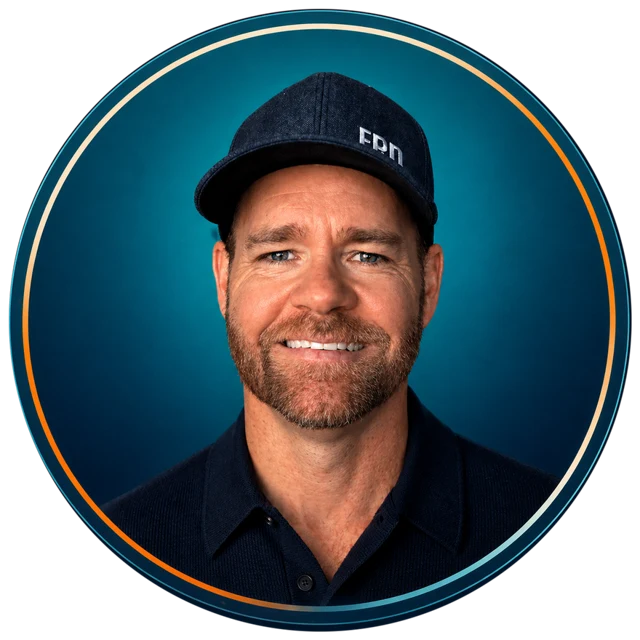 TJ LarkinHost, Local Media HQ PodcastDecember 5, 2025 · 9 min read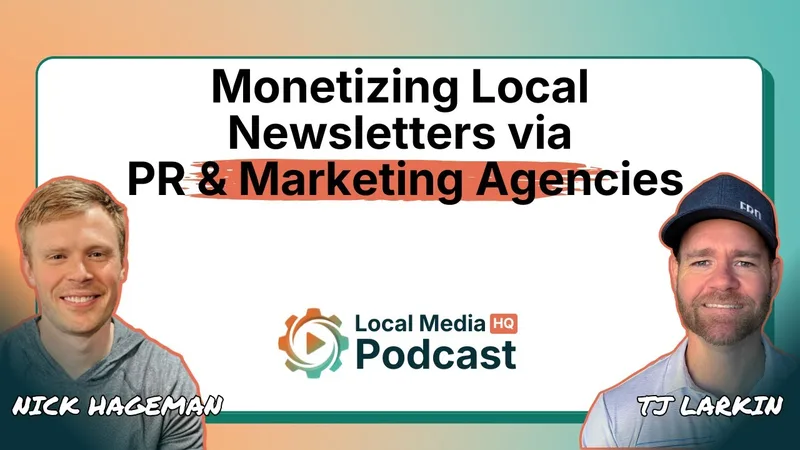
- Big brands have budgets, small openings don't. Nick spent his first stretch pitching new small businesses and learned they had zero marketing money. Recognizable brands and centers in Kansas City were the real customers.
- PR firms multiply every sale. Run one small campaign that works, even a couple hundred dollars for one client, and the firm takes you to its other clients and coworkers.
- Cover the press release, then show up. He covers releases he'd run anyway, tells the sender, shares click numbers from Beehiiv, and goes to their media nights. One of his biggest deals this year started at an event he didn't want to attend.
- Followers are not the same as subscribers. Two locally viral Instagram posts brought thousands of followers who barely engage. A $15 a month ManyChat setup brought 60 to 65 subscribers in about a month.
Nick Hageman runs KC Daily, a daily newsletter for the Kansas City metro with about 26,200 active subscribers. He does it alone, in a market of roughly two and a half million people. In this conversation he explains why he stopped chasing small businesses, how press releases and in-person events turned into recurring advertisers, and what viral Instagram posts did and did not do for him.
From medical sales to a phone call he had to step out for
Nick sold orthopedic equipment in medical sales for seven years before KC Daily. Friends who started NWA Daily in Northwest Arkansas about five years earlier asked if he wanted to run their blueprint in Kansas City. It isn't a franchise. He co-owns KC Daily with them, and they check in weekly while he runs things his own way.
The first issues went out in the spring of 2023. He hired a writer and some freelance social media help because he had no idea what he was doing. Then his phone rang in the operating room. It was one of his first advertising partners, ready to move forward, and he stepped out so he wouldn't lose the deal. That was his first advertising deal with real money, and it told him he couldn't build this on the side. In March 2024 he went full-time.
Today it's just him. He has no virtual assistant and no writers, only a tech stack.
Growing too fast, then cutting thousands
Early on, Nick spent fairly heavily on Meta ads and grew almost too quickly, to somewhere around 20,000 to 25,000 subscribers. Open rates sat in the low to mid 40s, and segmenting showed a lot of dead subscribers. The list was big but the revenue didn't match it.
He paused Meta ads, built up a revenue base and a local name, then came back at a lower spend. He has cut thousands of subscribers over the past year and a half. At one point he cut about 4,000 after open rates dropped 5 to 10%. He now thinks that was seasonal and he cut more than he needed to, and that he could have run an automation to win some back.
Slower channels fill in the rest. For ManyChat, he pays $15 a month. Followers get an automated DM inviting them to the newsletter. A Beehiiv segment showed 60 to 65 subscribers from it in about a month, which his mental math put at 10 to 15 cents each.
Two viral posts, and why he doesn't chase them
Nick had no personal Instagram when he started KC Daily. A few posts went viral locally. After a big snowstorm, he filmed himself suiting up to shovel like a dad gearing up for his Super Bowl, set it to funny music, and got thousands of shares. He guesses that post alone brought about 2,500 followers.
Recently he used an AI tool to make a photo of the Kansas City skyline look like the Upside Down from Stranger Things, and posted it on Stranger Things day. It took him about ten minutes and has around 17,000 likes and thousands of shares.
The catch is that people follow for the one post and expect that kind of content, which he doesn't normally make.
They follow, and then they're not engaging with my normal organic content. So I have a huge boost in the following, but also don't see an increase in engagement.
He would rather have followers who move to the newsletter, because that is where his revenue is. That is why he likes ManyChat and guides. For ad sales, he mostly bundles an Instagram post with a newsletter ad for local events. He knows he could monetize Instagram more directly with a local creator doing the filming, but he doesn't have the capacity yet.
A metro too big to write for yourself
Kansas City is the opposite of a small town where you struggle to fill a week. Nick calls it drinking from a fire hose. He is not his audience: a restaurant opening downtown excites him, but it won't always get clicks from 26,000 readers. Developments used to be a bigger part of the newsletter until engagement told him otherwise.
Geography adds friction. The Northland, north of the Missouri River, feels forgotten. The metro also straddles the Missouri and Kansas state line, so he hears from readers when he leans toward Johnson County in Kansas and skips Clay County in Missouri.
He polled readers about suburb-specific newsletters, with roughly 300 to 400 responses over a year, and about 90% said they'd want one for their suburb. He hasn't put pen to paper on it. TJ's suggestion was a metro brand with weekly sub-newsletters, and Nick's answer was that the limit is capacity. He chooses to use very little AI, and he says a quality brand takes time.
Where the revenue comes from
About 90% of Nick's revenue is newsletter advertising. The rest is a little social media, a dine card and a small fan club. He tried merch and it didn't work.
When he started, he pitched small businesses that were opening and quickly found they had zero dollars for marketing. It took him roughly two years to find his sweet spot: recurring advertisers with real budgets, like bigger brands, centers and recognizable players. Early on he pitched them as an unknown, asking for $1,000, and it was a mess. Now KC Daily has a name.
His dine card, the Daily Dine Card, partners with 12 restaurants. Cardholders pay $25 and get 20% off once at each restaurant. Restaurants pay nothing. He advertises each one in the newsletter and on social instead. A fan club has about 60 paying members at $5 or $10 a month, and he calls it mostly goodwill.
How PR firms became the best channel
The best thing to happen to his sales this year was PR, communications and advertising firms that have several clients. They already pay to market those clients. If a campaign works for one, even a couple hundred dollars, they take KC Daily to coworkers and other clients. He is on a first-name basis with a handful of big players there and sees plenty of agencies left to win.
Cold calling and emailing agencies was not the most effective route. Press release lists were. He starts covering the releases he'd run anyway, tells the sender it's going in tomorrow's newsletter, and follows up with the link. At first he was too direct, saying he was open to paid opportunities. Now he builds the relationship first.
- 01Cover the release
Use the press release the way you'd run any local news, then tell the sender it is going in tomorrow's newsletter.
- 02Send the numbers
Beehiiv lets him track their links. He tells them things like "you got 200 clicks in one day" and clients can check their own web traffic.
- 03Go to the event
Media nights and media days are where he meets people face to face. One of his biggest deals this year came from a long talk with the head of a PR firm at an event he almost skipped.
- 04Run a small campaign
When it works for one client, the firm shares him with its other clients and coworkers.
He doesn't remember how he got on every list. One thing that helped was Instagram. When he had 15,000 to 20,000 followers, he'd DM restaurants, businesses and events, whose accounts are often run by an associate at a firm. He says that beat a cold email, and once you're on some lists, people in the same firm start sending releases too.
Why a real face still matters
Nick thinks independent operators have a real advantage as corporations move into local and use AI agents to scrape and pass things along. He says he positions himself as a neighbor who loves Kansas City and is bootstrapped. Being at events, meetings and coffees goes much further than people expect.
He is also bullish on Kansas City. The World Cup is coming next summer, and he says it is the smallest market in North America to get it. The Chiefs have had success and Taylor Swift draws attention. If KC Daily is a decent-sized media player there, he says, it compounds, and it can grow alongside the city.
Questions people ask
Who is Nick Hageman?
How did he start KC Daily?
What is his main revenue source?
How did he get PR firms as clients?
TJ is the founder of Local Media HQ. Every week he talks with local media operators about what is actually working in their towns.