
A $1,000 a Month Local Newsletter Is Just the Start
Alec Kremins runs Beehiiv's partner program and the JLM Scoop in Jerusalem. He explains the sponsor math, what survey answers are worth, and why a local newsletter needs a business behind it.
 TJ LarkinHost, Local Media HQ PodcastJune 9, 2025 · 9 min read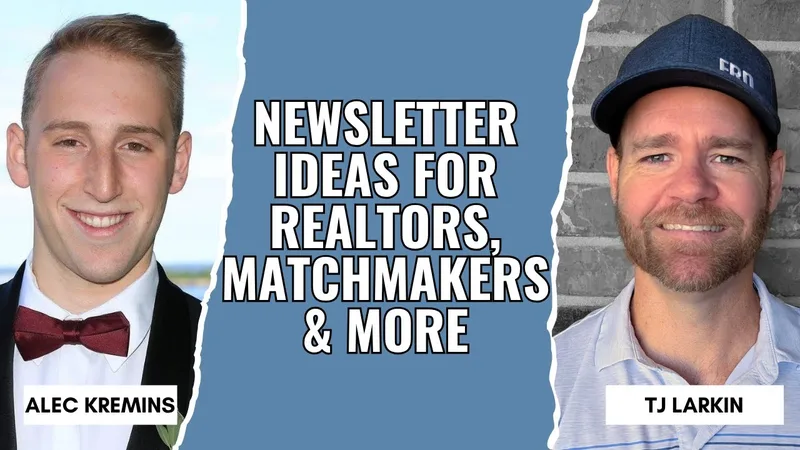
- Sponsors alone hit a ceiling. Alec's JLM Scoop brings in a little over $1,000 a month from two sponsors on about two hours of work a week, and he says it is hard to grow past that as a side hustle.
- Keep the main newsletter clean. When a realtor's survey turns up 600 to 700 people who want to buy or sell, Alec would spin up a separate opt-in newsletter or a lead magnet, not put listings in the local issue.
- Pair the newsletter with an asset. His sponsoring real estate agency wants its own newsletter, and Alec says the real money comes from owning a business the newsletter feeds.
- Everyone underrates the data. Business owners keep paying for print ads they cannot measure, so a monthly click and impression report makes a local sponsor feel the value.
Alec Kremins sees local newsletters from two sides. At Beehiiv he runs the partner program for the platform most of our operators publish on. In Jerusalem he runs the JLM Scoop, a weekly newsletter for the English-speaking community. In this conversation he gets specific about what a small local newsletter earns, where that stops, and the ideas he and I traded for getting past it.
Every Beehiiv hire has to start a newsletter
Alec joined Beehiiv about 13 months before we recorded. Part of onboarding is that every single new employee is required to start a newsletter. You do not have to keep it going, but you set up the design, the automations, the welcome emails and the website, so you use the whole product. He figures 15 to 20 people at the company run a weekly one.
His first try was something he barely remembers, maybe a jobs board or a travel newsletter. Then local newsletters took over X, and the timing fit. He had moved to Israel about a year and a half earlier, landed in Jerusalem a few months before starting at Beehiiv, and nobody was doing a local newsletter there yet. There is a big English-speaking population, so he could niche down. He launched at the end of September and has not missed a week.
What a Jerusalem newsletter actually earns
Alec gave the numbers plainly. The top sponsor, a real estate company, pays $700 a month for the top slot. A second sponsor pays around $400 for the secondary spot. That is a little over $1,000 a month.
His costs are small. A writer compiles the events and info for about $280 a month, and the newsletter takes him about two hours a week. He had a social media person at roughly $200 a month until she took a full-time job. He also cut his Facebook ad spend hard a few months back. His reasoning: plenty of people dump money into ads, end up with 5,000 or 6,000 subscribers and have not earned a dollar, so he wants to crack monetization first.
Why a side hustle hits a ceiling
Alec says sponsors are the easiest revenue because they take the least lift, but they cap out. In his words, it is very hard to scale a local newsletter as a side hustle. The people making six figures, he says, have an underlying business or service, with the newsletter amplifying it.
He has a live example. The real estate agency that sponsors him sells luxury properties for a few million dollars each, so one sale pays for the advertising forever. Now they want their own newsletter and asked Alec to help build it. He could charge a retainer of maybe $2,000 a month with them covering the Facebook ads. He would pursue it if he did not already have a full-time job.
I pushed the same idea: do it once for yourself, then help others do it. Even a small newsletter has perks, which Alec ticked off. He sat in a luncheon with the mayor of Jerusalem, did local radio interviews, and gets to send traffic to friends running events.
A realtor, a survey, and 700 hand raisers
Alec had helped a friend who is a realtor launch a newsletter in his town. The friend added survey questions at signup purely for his own benefit. Once Alec helped him get Facebook ads down to 15 cents, he picked up five or 6,000 subscribers in a month. About 600 to 700 of them said they wanted to buy a home, sell one or invest in real estate.
That raises the obvious worry. I asked how you reach those people without it feeling like a bait and switch. Alec's answer starts with his view of the job: you owe subscribers a lot of value every week, and a local newsletter is the best things to do in town for free. That is why he would never run a full dedicated ad.
I think that the local newsletter should be local events and everything like that. We shouldn't start featuring different properties. Even if a good portion of the people are interested, it should be something completely separate.
Two ways to use the answers
He gave two options for the realtor. First, segment everyone who answered yes, email them after the survey and offer a separate newsletter they opt into, maybe monthly, featuring properties or deals. It is no pressure, and the main audience stays undiluted.
Second, use lead magnets matched to each answer. For a seller it could be a property valuation or a calculator for what the home would get. For a buyer it could be current prices by zip code. Alec admits he does not know real estate well, so he framed these as ideas.
My concern was workload. We also talked about a commission instead of a flat fee, with the realtor offering around 15% of what he makes on a deal. Alec was wary of anything with gray area around large sums, and he came back to ownership: real wealth comes from owning something, and the newsletter is an asset you can partner with another one.
Can a local newsletter get to negative CAC
I brought up a talk from the people behind The Assist newsletter about getting acquisition cost to zero or below. Their seven-day onboarding series includes links to software tools, and the tool companies pay when someone signs up. Alec said the concept is common, and he named three ways it works.
- 01Boosts
Recommend a few other newsletters after signup and get roughly $1 to $4 per subscriber they gain. Hard in local because your audience is not niche.
- 02Partner links
Beehiiv's new partner money maker flow sends an email after 30 days with your partner link, and the program pays 50% for the first 12 months.
- 03Courses and communities
A welcome email that sells something like a $500 course can cover a Facebook acquisition cost. High ticket is what makes it work.
The medspa idea and the trust problem
I floated an idea from my own four local newsletters. About 70% of readers are women, over 50% make more than $100,000 a year and roughly 75% are over 35. That is the medspa customer. A welcome email could offer a new subscriber a discount, and the medspa pays per person who takes it.
Alec said it is doable in Beehiiv, with a separate flow after the welcome email. His worry is tracking and trust, because people can get greedy. Booking through the newsletter would give you proof. I suggested selling the lead for around $10 instead of charging for visits, the way insurance lead gen works, which leaves the hard part as finding an owner with a team that follows up fast.
Business owners do not see the value yet
Alec says most business owners have no idea how exciting trackable data is. He spoke with people throwing money at print ads who could not say what it translated to. Early on, Mikey advised him to give away a few ads for free, which signals you are open for business and builds case studies.
His own hack is the monthly sponsor report. He copies the clicks and impressions for each sponsor into ChatGPT, asks for a branded report with a chart, and it looks like a lot of work for very little. I added that the free local magazines sent to a zip code make real money and cannot answer how a business knows an ad works.
Matchmaking as a newsletter business
I asked Alec about a local newsletter I saw run a dating profile. He already runs a Humans of Jerusalem style profile segment. In the Orthodox Jewish community where he lives, he told me, a matchmaker is expected to be paid, usually around a thousand dollars per side.
He suggested describing a person without a photo, and starting with men to play it safe. Readers can fill out a Google form, and a reader could even submit a grandchild. He is going to think about trying it. I said there could be a whole company in local matchmaking.
What he would tell someone starting out
Alec called building a newsletter a very high ROI activity, and said the local playbook is already out there. He also recommended building in public, with weekly updates on where the newsletter stands, which helps you grow an audience you can use elsewhere. He had just hit 10,000 followers on LinkedIn that day.
His biggest learning is that it is not a get rich quick thing. The value is also non-financial: giving people in your community a voice, and walking into a coffee shop to tell the owner you featured them and seeing how thankful they are.
Questions people ask
How much does the JLM Scoop make?
Why does Beehiiv make every employee start a newsletter?
What should a realtor do with survey answers from buyers and sellers?
How can a local newsletter get to negative CAC?
TJ is the founder of Local Media HQ. Every week he talks with local media operators about what is actually working in their towns.