
Cutting the links off his landing page halved his cost per subscriber
Jas Singh took the Winnipeg Digest to nearly 25,000 subscribers in a year. He shares the landing page fix, how he sells $10,000 exclusive ad packages, and why he is building summer markets and a directory.
 TJ LarkinHost, Local Media HQ PodcastApril 24, 2025 · 8 min read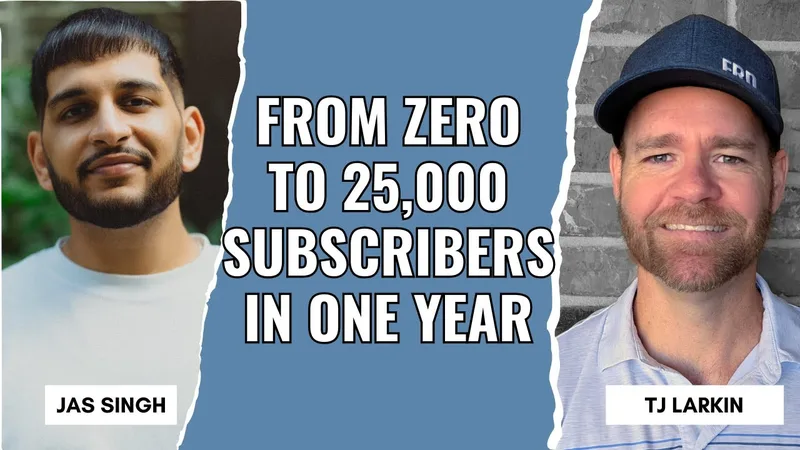
- Strip the signup page down to an email box. Extra links and Beehiiv's "read more" button pulled people away, and removing them cut Jas's cost per subscriber about in half.
- Reels to grow, carousels to maintain. He spent about two hours a day on reels until he passed 10,000 to 15,000 followers. Now carousels take about 30 minutes a day.
- Sell exclusivity, not one-off ads. His standard offer is $10,000 a year for 10 newsletter posts and one Instagram reel, with no competitor in the same niche. He has sold about $70,000 in the past year and booked about $30,000 more.
- Add revenue outside the newsletter. He runs marketing for summer markets on a profit-only deal and is building a paid business directory.
Jas Singh started the Winnipeg Digest about a year before we recorded and had nearly 25,000 email subscribers by then. He also had roughly 60,000 followers on social media. Most of the work is still his. This conversation covers the signup page fix he shared with me, how he thinks about Instagram, how he sells ads, and the side bets he is placing next.
The signup page change that halved his cost
I opened with this one because Jas gave me the advice and it helped me a lot. The page you send Facebook ad traffic to should have nothing on it except a place to enter an email. No links, no "read more," nothing else.
Jas made the same mistake first. His own landing page had too much random information on it, and a distracted visitor costs you more per subscriber. On Beehiiv there is also a "read more" button under the signup box that you have to turn off by hand. Turning it off cut his cost of acquisition about in half, and I got a similar result when I fixed mine.
Why a newsletter owner should care about Instagram
Jas sees Instagram as a funnel in. A follower might never subscribe to the email, but the account does three things for him.
First, it widens what he can sell. If the most he can charge a company for 24 email slots is $20,000, but that company has a $40,000 budget, he can offer six videos over the year for something like $12,000 more.
Second, it makes his ads work harder. People who already get free value from his videos find the subscribe ad an easy yes, and he expects that to lower his cost per subscriber over time.
Third, it gets him replies. He says the Digest is a top three to five followed account in the city, so local businesses are almost obliged to answer his DMs.
He also pointed out that a buyer would pay for the Instagram too, if he ever sold.
If you're going to start an Instagram account, do what we did in the start, not what we're doing today. So don't go to our Instagram and start copying what we're doing today, but go and scroll back to the first post and see what we did back then.
Reels to grow, carousels to keep people engaged
Jas spends about 10 hours a week on social and posts at least once a day. At the start it was all reels. He spent about two hours a day scripting, recording, editing and researching them until he reached around 10,000 to 15,000 followers.
Reels get pushed to people in your city, because everyone scrolls the reels tab. And they did not all need a restaurant visit. He posted food and coffee shop reels once or twice a week. The rest were green screen videos of him talking about events that week or a city announcement.
Now the Digest leans on community initiatives and city updates, like which road is closed. Those go in carousels that take about 30 minutes a day. A carousel needs an audience to pick it up, because followers share it with friends. Once you pass 5,000 to 10,000 followers, he says, carousels can be huge.
Summer markets and the profit-only deal
Jas had never run an event, and he did not want the hassle of vendors, venues and billing. He had advertised a local market called Summer of Locals, and it did so well that the organizers came back for a winter market. He charged them about two grand each time.
Then he suggested a different deal: he would handle all their marketing, charge only from their profit, and make money only if they did. Because they no longer had to focus on marketing, they planned five summer markets. They are free for the public, and only vendors pay.
His marketing is mostly the Digest itself. They will post their own reels, and about two weeks out he will start Facebook ads at around $10 a day. He calls himself their fractional CMO.
How he sells ads
Jas sends about three to five cold emails a day to businesses where he can add value: home services, high lifetime value businesses, dental offices, physios and med spas. He follows up by email and on Instagram, and sometimes it is as simple as a coffee.
He pushes annual deals over one-offs. The standard package is $10,000 for 10 newsletter posts and one Instagram reel, with exclusivity in the buyer's niche. His advice for anyone selling ads is to sell the exclusivity and say you are talking to other companies in their category. Early on he really was not, but now he is, and he gets to pick the best fit.
His media kit has a chart comparing the Digest with Facebook ads and traditional advertising. Against Facebook, he says, your exclusive spot beats competing with your rival for the same dollars.
He said they are nearly at capacity with annual advertisers alone. With about 10 of them, each getting one slot a month, there is little room left. Next he plans cheaper secondary slots for one-offs, probably lower in the email and shorter.
He also told me about a window cleaning company that paid $1,000 for a one-off ad. The owner said they made about $1,250 in the first 24 hours.
Directories, events and the long game
Jas thinks a local media business tops out at about $300,000 to $700,000 a year in sales. So he is testing other things. The summer markets come first, and if they work he wants a bigger market like the one at Bryant Park in New York.
He is also building a directory. His math is $300 for the top spot in each industry, across 30 industries, which he figures is $9,000 a month with little extra work.
His longer plan is to use the media company's income to start businesses in the home services space. Or he would do what he did with the markets: find a small HVAC or plumbing company, show what he can deliver, and make the renewal an equity-only contract.
Stay in Winnipeg, and don't buy growth too fast
I asked about launching in other cities. For now, no. Winnipeg is a city of about a million people, so he can keep spending on Facebook ads until he reaches around 50,000 subscribers. If he did expand, it would likely be to Regina, which is a six or seven hour drive away. He would rather someone else start it and sell him the subscribers if they can't make money.
On growth pace, he disagrees with spending $10,000 a month to hit 10,000 subscribers in month one. You build a brand overnight that nobody knows. He would cap spend around $3,000 a month, about $100 a day, so you can refine your content as you grow.
On giveaways, he does not like them for the newsletter, because people sign up with fake emails. When he did one for Instagram, a local company paid $800 for the post, $400 for the prize and $500 for ads.
Why he says to build your audience now
Jas thinks a tool that writes tomorrow's local newsletter at the click of a button is a year or two away. By then, he says, someone starting a Winnipeg competitor is almost too late, because the Digest will already have the audience.
His advice for anyone five hours away from a market like his is to start now. In two years, someone who has already built one newsletter can come to your city and do it much faster, because they know what to spend and which ads to run.
Questions people ask
How did the Winnipeg Digest grow so fast?
What does Jas sell to advertisers?
Why does he bother with Instagram if the money comes from email?
What are the summer markets?
TJ is the founder of Local Media HQ. Every week he talks with local media operators about what is actually working in their towns.