
Hats, Beer Cans and Cold Emails: Six Months of Monetizing
Geoff Matthews grew North Shore Now to 7,500 subscribers in six months, then tried cold emails, merch, giveaways and paid memberships. He says which ones worked and which ones flopped.
 TJ LarkinHost, Local Media HQ PodcastJune 16, 2025 · 8 min read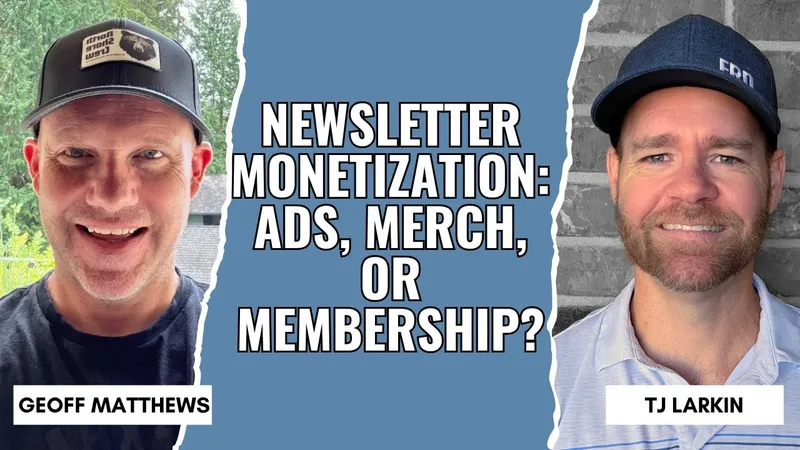
- Two bridges made the product. North and West Vancouver sit across the water from the rest of the city, and nobody wants to cross a bridge for the weekend. "You don't have to cross the bridge" became the whole pitch.
- Meta ads worked, then broke. Cost per subscriber climbed past $4. After a 45-minute call with TJ and a rebuild from step one, it dropped to 40 to 60 cents, and he now adds 100 to 300 subscribers a week.
- Local ads are a grind. Cold emails got one or two replies per couple hundred sent. Small businesses have $400 or $500 to spend, not a marketing budget, so he stopped counting on weekly sponsors alone.
- Products and paid tiers taught him the most. 170 people said they wanted the hat and 30 bought one. A $5.99 paid tier added only one or two subscribers per send, so Instagram is next.
Geoff Matthews started North Shore Now in January. By the time we recorded, he had just over 7,500 subscribers, a 63 percent open rate, and a long list of things he had tried to turn it into a business. He was honest about all of it, including the parts that did not pay. His rule for the whole project: throw a lot at the wall and see what sticks.
Nobody wants to cross the bridge
Vancouver is a big Pacific Rim city made up of smaller cities. North and West Vancouver are separated from the main part by water, with two bridges across. Geoff says people there have a lot of pride in where they live. It is clean and safe and full of outdoor stuff, but for anything fun, "you got to cross a bridge and that will take years off your life."
With 300-some thousand people on one side and two bridges about three lanes wide, the traffic is bad. So he and his partner built the newsletter they wanted for themselves. Every week they check almost a hundred websites for events, because the Facebook events and community association lists are scattered and messy. A lot of people did not know there was live music and live comedy on their side of the water, plus plenty for kids and seniors.
What he wanted from it
From the start they wanted it to be a business. One idea was revenue from the newsletter itself: sponsors, sponsored events and branded merch. The other was to use the audience as a way to find local businesses worth investing in, writing small checks to two or three of them so they would own a marketing arm for those companies.
Cold emails and a farmers market trade
Geoff says most people assume they will "just sell ads," and he calls that possible but hard to scale in a market this small. Local businesses often do not understand return on investment and do not have a budget. He could reach 50,000 people and the business still has a few hundred dollars to spend.
I could reach 50,000 people on the North Shore, but they still only have 400 bucks or 500 bucks to spend.
So he went looking. He scraped vendor lists from trade shows, went through the Chamber of Commerce for both cities, and pulled emails with Apollo. Cold email gave him one or two replies for every couple hundred sent. For a while the ads were revenue neutral, because every dollar from sponsors went straight back into Meta ads.
Then a title sponsor who also works part-time for Coastal Markets offered to trade an ad spot for a table at a weekly summer farmers market. He and his partner went around talking to vendors with little info sheets, and signed people up on an iPad with a QR code. It cost nothing, and he says talking face to face beat cold emailing. He is not sure how many subscribers it brought in, but he plans to go back.
From Facebook groups to Meta ads
His first 500 to 1,000 subscribers came from local Facebook groups: mom groups, buy-nothing groups, dad meetups. Most have a self-promotion day, so he posted for two or three weeks before launch. Soon after launch he got serious about Meta ads, which was new to him, so he copied what other local newsletters were doing.
It worked until it did not. The cost per subscriber went over a dollar, then over $2, then over $3, then over $4. Every new creative came back at "3 something" after 24 hours. At $4 a head, he says, getting from 7,000 to 10,000 subscribers is not a number even worth figuring out.
He talked to anyone who would talk about Meta ads, including TJ. After one call, he went back to step one and rebuilt the campaign. He says he still cannot say exactly what was broken, but the cost has held between 40 and 60 cents for about three weeks. He knows the ceiling is coming, though: with about 75,000 households on his side of the water, he has already reached roughly 10 percent.
Hats, painted cans and a game
Geoff also built products. He had hats made, and he had a local artist hand-paint a can for each of the nine local breweries, then scan the paintings and sell them as signed, numbered prints, timed for Father's Day. When people buy, he runs a pickup event at a brewery, and every pickup is a conversation.
Those conversations changed his mood. He had worried he was annoying people by asking for feedback and money all the time. Instead, people told him to keep trying stuff. And when he tells them it is just two people behind the email, they are shocked that they can hit reply.
The sales numbers were less cheerful. 170 people said they wanted the hat, and 30 bought one. Everything was pre-order, so he did not lose money, but he had higher expectations, and none of it is a regular source of income. He has also made a board game he has not announced yet, and he admits he is nervous about it.
A giveaway in almost every issue
The newsletter is built around good vibes, and giveaways fit that. A business offers a gift basket, homemade sweets or $100 at a restaurant. The newsletter runs a section where readers follow the business on Instagram, follow North Shore Now, and answer yes or no to enter. Next week the winner is named, with permission, so the business gets two mentions for nothing.
Geoff likes the goodwill, but says he sometimes would rather the business bought a real ad. That is why Instagram is now a focus: he thinks there is no reason North Shore Now cannot be the biggest local account on the North Shore.
The paid tier that did not take off
He and his partner took a run at a paid subscription, starting at $5.99 a month or $59 a year. The plan was a special Tuesday email, but they quickly saw it would become a second newsletter. A handful of people took the annual plan. Otherwise they were adding one or two paid subscribers each time they sent to 7,000 people.
He worries about locking in annual subscribers when the business could change in six months. TJ suggested pairing it with giveaways only paid readers can enter, or a $10 monthly or $25 annual anchor. Geoff wants to lean less on weekly sponsors and move toward a group of businesses paying monthly, with TJ's suggestion of eight to ten permanent sponsors listed in every issue.
Why you need a short pitch
His biggest lesson came from a call. A well-known local travel company wanted its events listed in the newsletter. Geoff said no and pointed to the rate sheet, and the owner asked what the difference was between those events and the ones he already included. He had no good answer, the call got testy, and he figures that sale is gone. His takeaway: write a short, clear pitch for advertisers, subscribers and sponsors before you need it.
- 011. Get past 10,000 subscribers, which TJ says makes pitches sound bigger.
- 022. Build Instagram toward 10,000 followers too, with simple talking-over-a-screenshot videos.
- 033. Sell sponsors a package of ads and shoutouts instead of single spots.
- 044. Hold events at a place a sponsor will pay for, such as a paid kids' playground.
Questions people ask
What is North Shore Now?
How many subscribers did Geoff have when we recorded?
How did he get his first subscribers?
What was the hardest part of making money?
TJ is the founder of Local Media HQ. Every week he talks with local media operators about what is actually working in their towns.